
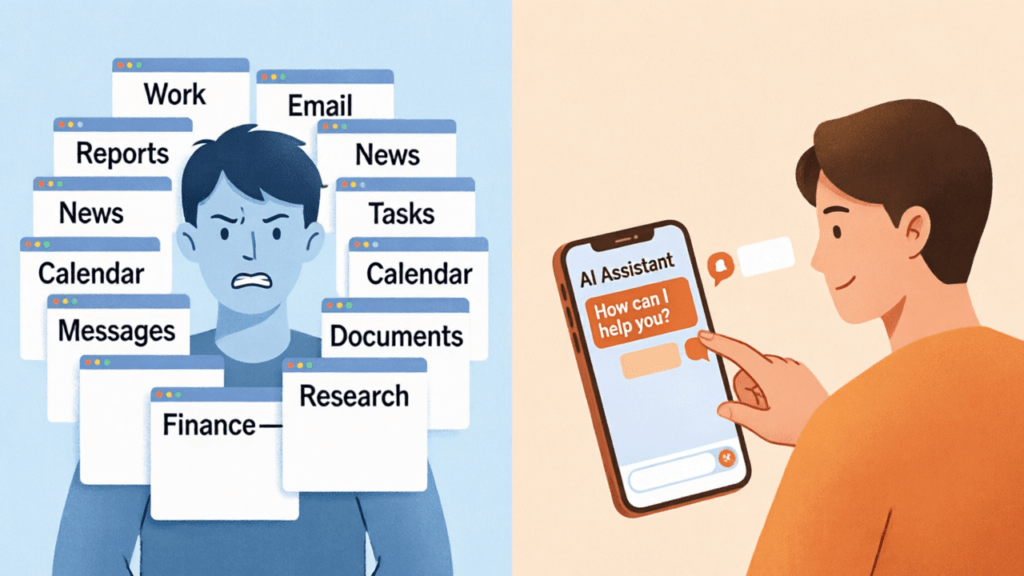
Have you ever searched for something super niche on Google – like “how to fix error code 0x80070005 on Windows 11 without admin rights” – and had to open 10 tabs, skim through forums, cross-check dates, and mentally stitch together the real answer?
I have. Too many times.
But today, when I ask the same question to ChatGPT, Perplexity, or Gemini, I often get a clean, step-by-step answer in seconds. No clicking, no ad-jumping, no guessing.
That shift – from searching yourself to asking an AI – is exactly why I started this blog.
The “Small Query” Frustration That Led Me to GEO
On a random evening in May 2026, I was trying to fix a weird bug on my local development environment. The search term was so specific that Google returned only two loosely related forum threads. I spent 45 minutes jumping between them, copying command snippets, and testing blind.
Then, as a test, I pasted the same question into Perplexity. It not only gave me the correct terminal command but also explained why the error happens and linked to the exact source I had missed.
That was my “aha” moment.
I realized: AI search engines are already doing the synthesis work we used to do manually. And if AI is reading and summarizing content from the web, then optimizing for AI engines – not just for Google’s blue links – is going to become essential.
That’s how I stumbled upon GEO – Generative Engine Optimization.
What is GEO? (A Quick Definition for New Readers)
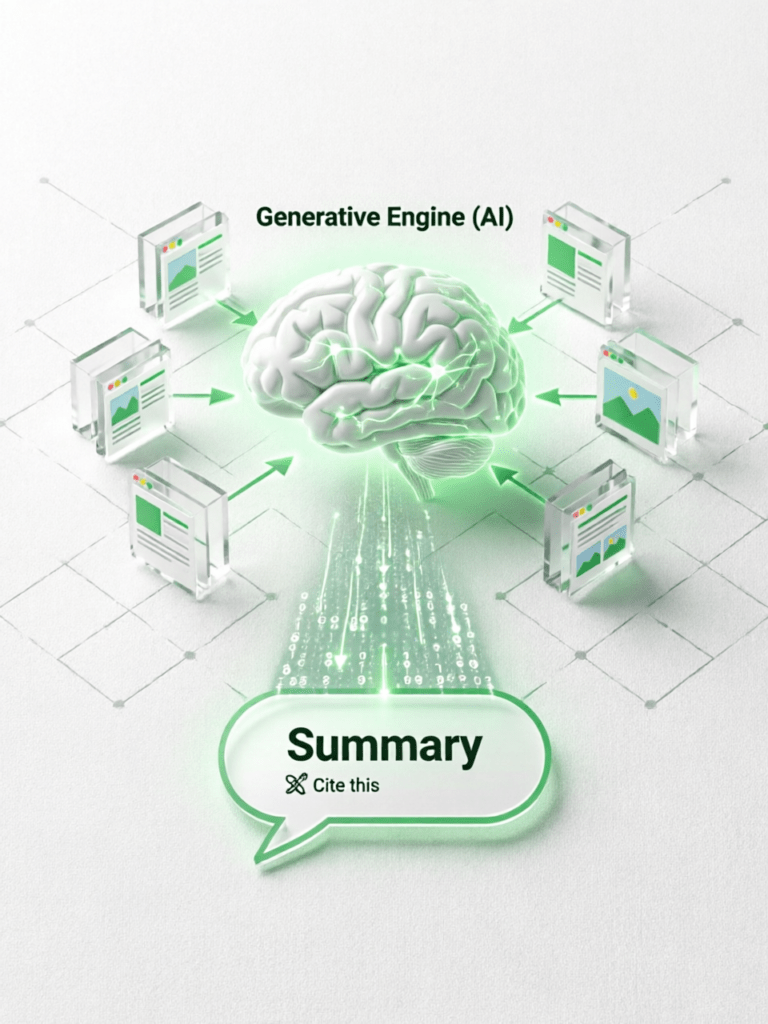
GEO stands for Generative Engine Optimization. It’s the practice of making your web content easy for AI models (like ChatGPT, Gemini, Copilot, Claude) to crawl, understand, summarize, and directly quote when they generate answers.
Instead of fighting for a #1 click on a search engine results page (SERP), GEO aims for a citation inside an AI-generated paragraph. Your content becomes the source the AI trusts – not just another link to scroll past.
Its familiar cousin is SEO (Search Engine Optimization), which focuses on traditional search engines like Google or Bing – optimizing for keywords, backlinks, and click-through rates.
| Aspect | SEO (Traditional) | GEO (AI Era) |
|---|---|---|
| Target | Search engine rankings (blue links) | AI-generated answers (citations) |
| Primary metric | Clicks, impressions, CTR | Citation rate, mention in AI summaries |
| User behavior | User clicks and reads your page | AI reads, summarizes, may or may not link |
| Key techniques | Keywords, backlinks, meta tags | Clear structure, Q&A format, authority signals |
The new reality: You need both. SEO still drives direct traffic. GEO helps you get quoted by the AI tools that billions will soon use as their primary search interface.
Why I Created This Blog – And What You’ll Learn

I’m not an “SEO guru”. I’m a curious builder and learner who saw the wave coming. This blog is my learning-in-public notebook about:
- Practical SEO strategies that still work in 2026
- GEO experiments – testing how to structure content so ChatGPT wants to cite it
- Real case studies (what works, what fails) as AI search evolves
- Tools, tips, and mistakes – shared openly
If you’re a blogger, indie maker, content creator, or small business owner targeting English-speaking audiences (especially the US/UK/Canada), you’ll find actionable insights here – without the fluff.
What You Can Expect Next
My very next posts will include:
- A simple GEO checklist for existing articles
- How to rewrite your “FAQ” section for AI citation
- Comparing Google SGE vs Perplexity citation patterns
The AI search landscape changes fast. But one thing is certain: wherever search exists, optimization follows.
Thanks for joining me on this journey. Let’s learn GEO + SEO – out loud, together.
P.S. Have you ever had a “small search” frustration that AI solved instantly? Reply or comment – I’d love to hear your story. (It helps me write better case studies.)

About Shelldy
An ordinary practitioner learning SEO from scratch. By day, I work in the internet industry; by night, I turn what I’ve learned into articles. I believe that honest learning records are more valuable than rehashed tips. Feel free to connect and exchange ideas.